05/01/2026
Tension straps for motorcycles put to the test – Stay safe on the road with the right lashing straps
Why are tie-down straps so important for motorcycles?
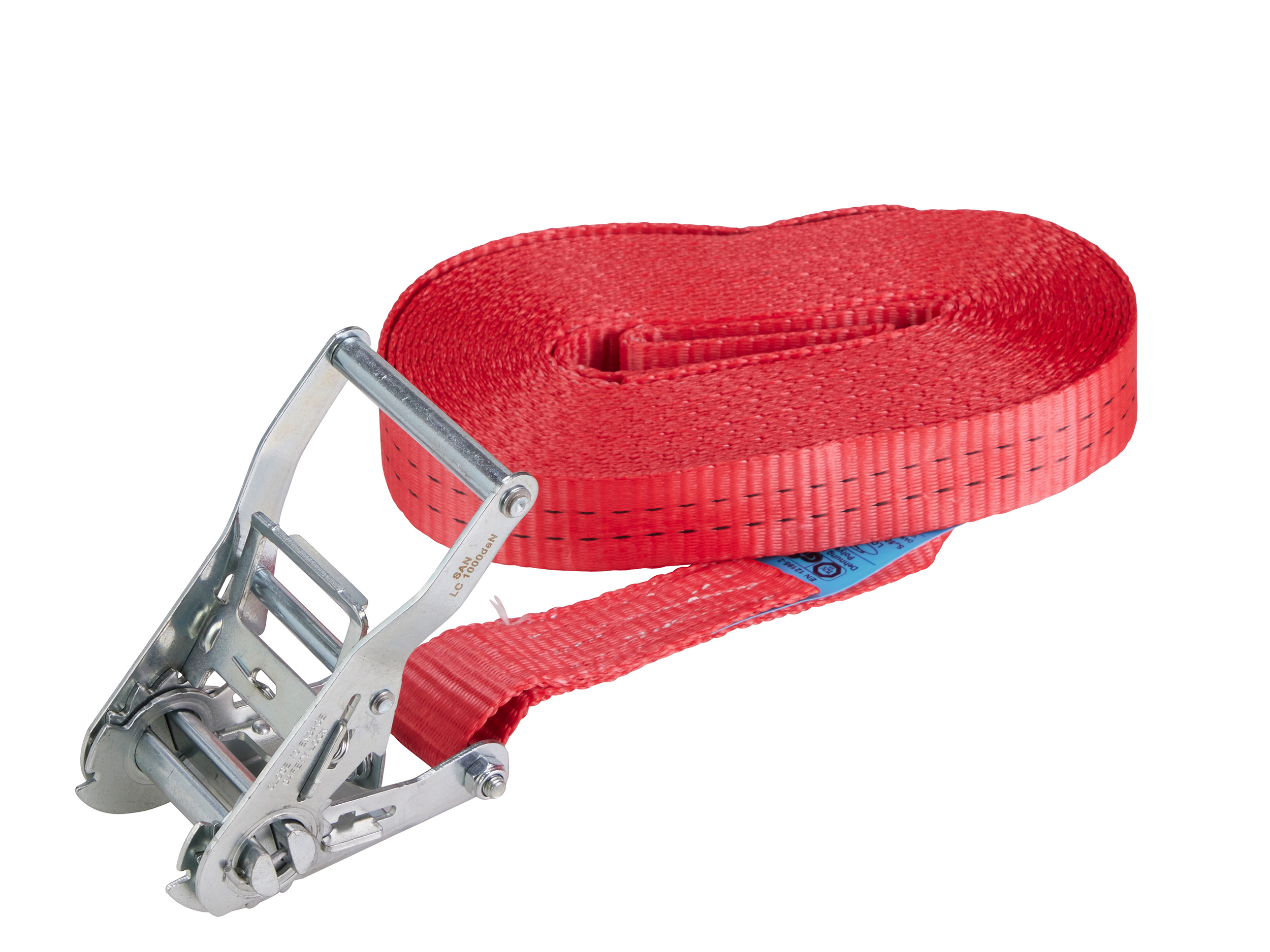
When transporting a motorcycle —whether on a trailer, in a van, or on the back of a truck—proper load securing is paramount. A motorcycle is heavy , unwieldy, and must not move under any circumstances while driving. Only high-quality motorcycle tie-down straps ensure that the bike remains firmly secured and arrives safely at its destination.
Our motorcycle tie-down strap test shows that not every strap is equally suitable. In addition to load-bearing capacity, handling, material quality, and special features such as protective fastenings also play a role.
Motorcycle tensioning straps test – what matters
A professional motorcycle tensioning strap test takes into account several important criteria:
- Load capacity (LC value) – the lashing straps must be designed for the weight of the motorcycle.
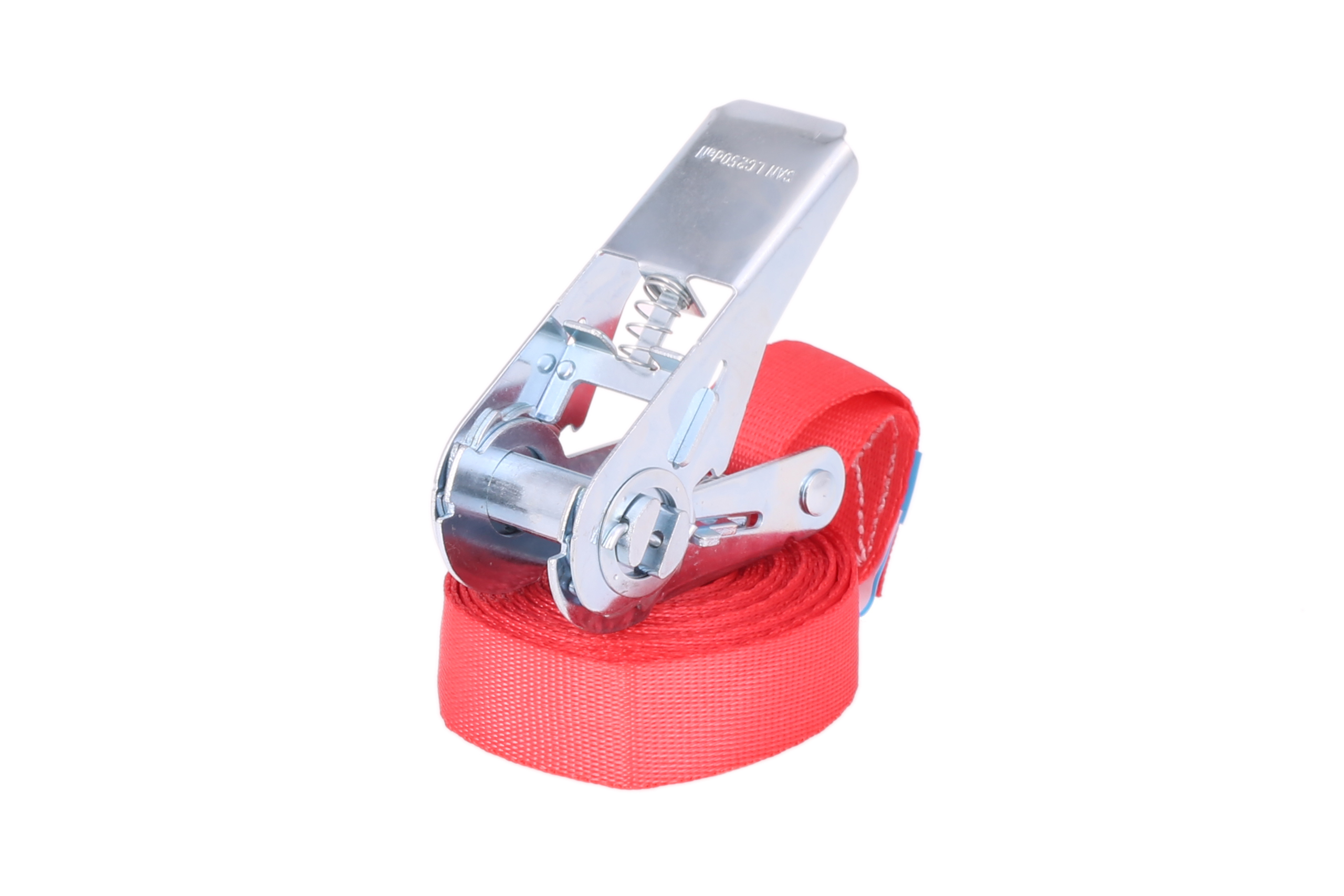
- Ratchet mechanism – should be smooth but robust.
- Length and width – sufficient dimensions for a secure hold.
Particularly important : A motorcycle should never be secured with just two straps. Four lashing points are required – two each at the front and rear.
Motorcycle tensioning straps – The best features
In our motorcycle tensioning strap test, the following features proved to be crucial:
- Included loops : These allow secure attachment to the handlebar or fork bridge without damaging the delicate parts.
- Rubberized hooks : Prevent scratches on the frame or eyelets.
- High pre-tension force (STF) : Ensures that the belt does not loosen even on long journeys.
This gives motorcycle lashing straps a clear advantage over simple standard straps , which are often too hard or unwieldy.
Motorcycle lashing straps test – safety in practical use
A motorcycle tie-down strap test clearly shows : Cheap universal tie-down straps are often unsuitable for motorcycles. They offer neither the necessary protection against damage nor the required tension.
We recommend special motorcycle lashing straps designed for this purpose. They combine high load-bearing capacity with motorcycle-friendly features . In practice, this means the bike remains stable without damaging the handlebars, paint, or chassis.
Conclusion – Quality pays off
Our comparison in the motorcycle tensioning strap test makes it clear: If you want to transport your motorcycle safely, you should rely on high-quality, tested lashing straps that have been specially developed for motorcycles .
Only tested straps with high load capacity and gentle fastening are the right choice.
Fragen und Antworten (FAQ) zum Motorrad Spanngurte Test
Wie sichert man ein Motorrad mit Spanngurten richtig?
Beim Motorradtransport wird die Maschine meist mit mehreren Spanngurten an stabilen Befestigungspunkten im Fahrzeug oder Anhänger fixiert. Die Gurte werden an stabilen Teilen wie Rahmen oder Gabel befestigt und gleichmäßig gespannt. Dabei sollte das Motorrad aufrecht stehen und leicht in die Federung gezogen werden, damit es während der Fahrt stabil bleibt.
Wie viele Spanngurte benötigt man für ein Motorrad?
In den meisten Fällen werden mindestens vier Spanngurte verwendet – zwei vorne und zwei hinten. Diese verteilen die Kräfte gleichmäßig und verhindern, dass das Motorrad nach vorne, hinten oder zur Seite kippt.
Welche Spanngurte eignen sich für den Motorradtransport?
Für Motorräder eignen sich besonders Ratschen-Spanngurte oder Cam-Buckle-Gurte mit ausreichend hoher Zurrkraft. Entscheidend sind:
- stabile Haken oder Schlaufen
- ausreichend hohe Zurrkraft (LC-Wert)
- robustes Gurtband aus Polyester
Je nach Gewicht des Motorrads werden Gurte mit höherer Belastbarkeit empfohlen.
Welche Rolle spielt der Zurrwinkel beim Motorradtransport?
Der Winkel der Spanngurte beeinflusst die Stabilität des Motorrads. Ideal ist ein Zurrwinkel von etwa 45 Grad, da dadurch Kräfte aus verschiedenen Richtungen besser aufgenommen werden können.
Welche Fehler sollte man beim Verzurren eines Motorrads vermeiden?
Zu den häufigsten Fehlern gehören:
- zu wenige Spanngurte verwenden
- Gurte an ungeeigneten Bauteilen befestigen
- Gurte zu locker oder zu stark spannen
- fehlende Kontrolle der Sicherung während der Fahrt
Solche Fehler können dazu führen, dass das Motorrad während des Transports instabil wird oder sich löst.