
Edge protectors and edge protection strips for load securing
Edge protection is important to avoid damaging or denting the lashed goods and the cardboard boxes. Larger plastic edge protection strips such as the classic orange strips made of honeycomb plastic are also intended to protect the load securing equipment, e.g. the lashing strap, from damage and thus ensure transport safety. In our load securing online shop, you can buy edge protection angles of different sizes, either made of cardboard or plastic.
Cardboard angles are primarily used as single-use angles. The edge protection products used for securing heavy goods (e.g. concrete parts, paper rolls, etc.) are mostly plastic edge protectors and are designed for reusable use. Many edge protection strips (both the larger cardboard variants and plastic edge protection) have guide slots through which the strapping band or the ratchet strap is guided. The edge protection therefore always remains in the correct position and cannot slip.
In our assortment, we have the right edge protection for all lashing straps, lashings and strapping bands. Here too, there are single-use and reusable variants. Let us advise you. We look forward to your inquiry!
Edge protectors and edge protection strips assortment
The following products are in our standard edge protection assortment and can also be ordered directly online. If you need a different product, we will gladly create an individual offer for you with our manufacturer.

Edge protection angle (hollow chamber structure) 1200x190x190x19mm
Edge protection angle (hollow chamber structure) 1200x190x190x19mm 190mm x 190mm, 19mm thick orange 100 pieces=1 pallet
Edge protection angle (hollow chamber structure) 800x190x190x19mm
Edge protection angle (hollow chamber structure) 800x190x190x19mm 190mm x 190mm, 19mm thick orange 120 pieces=1 pallet
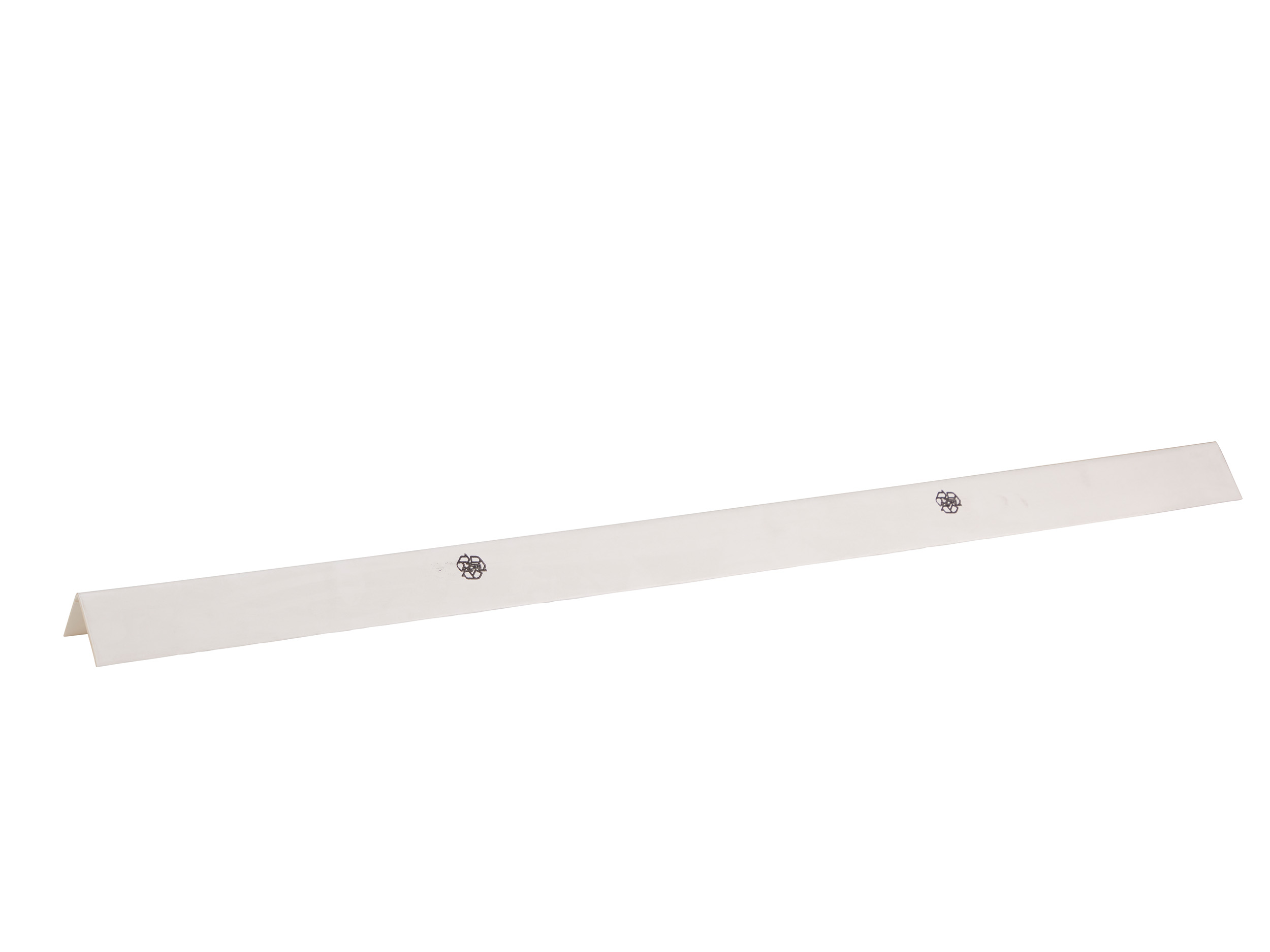
Edge protection angle HS/PE - weatherproof, 1,000 x 60 x 60mm, thickness 3mm
Your robust partner for long-lasting protection of your valuable goods in any weather! Measuring 1,000 x 60 x 60 mm and 3 mm thick, this edge protector offers maximum stability and protection against impacts, scratches, and other damage . Made from high-quality, weatherproof HS/PE material, it successfully withstands the elements, whether rain, snow, or intense sunlight. Ideal for outdoor use as well as demanding industrial applications , the edge protector offers a durable solution that effectively protects your corners and edges and extends the lifespan of your products. Whether in logistics, construction, or production – rely on the HS/PE edge protector for reliable protection in any weather!

Edge protection angle HS/PE - weatherproof, 120x60x60x3mm
The Sandax edge protection angle is made of a sturdy HS/PE layer laminated with plastic on both sides . This makes it completely weatherproof and provides reliable protection for both indoor and outdoor use . With its dimensions of 120 × 60 × 60 mm ( wall thickness 3 mm ), it is ideal for pointed or sharp edges and effectively protects loads against damage and warping . Edge protection angles therefore play an important role in load securing . Technical data for the edge protection angle at a glance Dimensions : 120 × 60 × 60 mm Wall thickness : 3 mm Material base : HS/PE (high-strength polyethylene) with plastic lamination Surface : Weatherproof sealed – no moisture exposure Packaging unit (VE) : 500 pieces/carton Pallet quantity : 15,000 pieces Your benefits at a glance ✅ Plastic edge protection angle – ideal for sharp load edges, protects straps, film and cardboard boxes ✅ Weatherproof design – perfect for outdoor use, withstands rain, sun and cold ✅ Edge protection angle for load securing – prevents abrasion on the edges of lashing straps and protects against material stress ✅ Robust & dimensionally stable – HS/PE offers a mixture of rigidity and impact resistance ✅ Effective reinforcement – additional lamination increases resistance to mechanical stress ✅ Large stocks available – 500 edge protectors per carton, 15,000 per pallet – ideal for logistics and production plants ✅ Cost-effective accessories – high protection at a low price Recommended areas of application for HS/PE edge protection angles Load securing & packaging : Protect cardboard and pallet edges when lashing during road transport Wood, steel and glass transport : Use the angle to protect sensitive edges from scratches and breakage Container & Outdoor Logistics : Weather-resistant – ideal for open transport without tarpaulin Construction & logistics centers : Adapt the angle flexibly to pallet joints, profiles and building materials How to apply edge protection Positioning : Place bracket flush with load – top or side Fixing : Fasten with tensioning straps, foil or strips Secure : Angle protects edges from sharp-edged loads Storage : Reusable – simply disassemble and reuse after transport

Edge protection angle with T-cut - made of solid cardboard, 1130x150x150x9mm
Absolutely dust-free due to guillotine cut (suitable for vacuum lifters) 270 per pallet Customs tariff number: 48195000
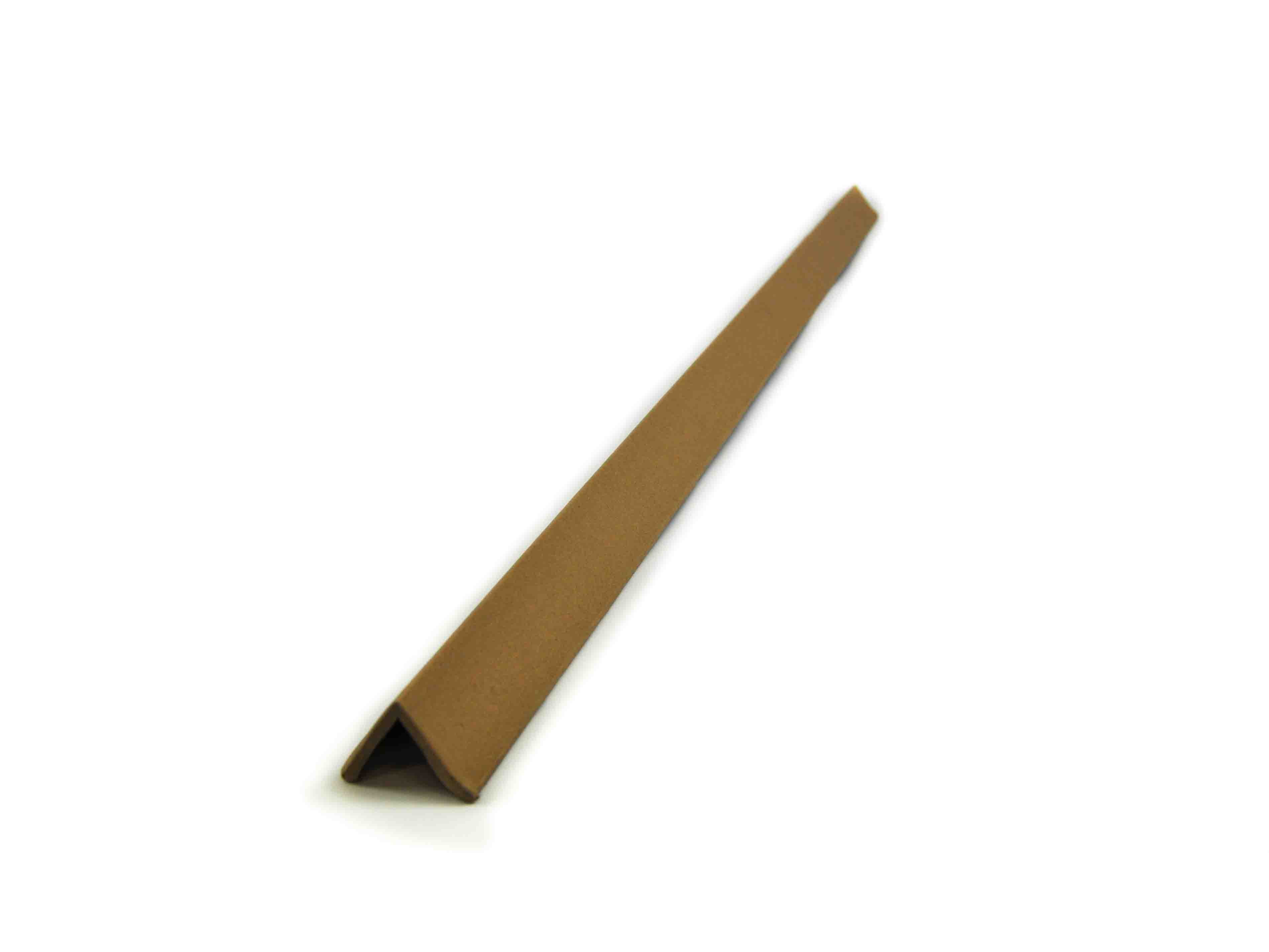
Edge protection strips made of solid cardboard 945x35x35mm, thickness 2mm
Our solid cardboard edge protectors, measuring 945x35x35mm and 2mm thick, offer robust and reliable protection for the delicate corners and edges of your products . Perfect for transporting and storing a wide variety of items , these protectors ensure that your goods arrive at their destination safely and undamaged. The environmentally friendly solid cardboard is not only strong and stable, but also sustainable. Easy to handle and quick to install, our edge protectors are the ideal solution for preventing damage and ensuring the longevity of your products. Whether in industry, retail, or for private relocations – rely on protection that delivers what it promises.

JUMBO edge protection angle up to 70mm band width, (hard)
Your optimal solution for protecting your cargo with an exceptional level of stability and security. Specially designed for use with webbing straps up to 70mm wide , this robust edge protector offers unparalleled protection for your packages during transport or storage. Made from a tough material, the JUMBO edge protector guarantees durability and resistance to the daily demands of logistics and industry. Using this edge protector minimizes the risk of damage to your products. Whether you're transporting heavy machine parts, delicate furniture , or simply loaded pallets , the JUMBO edge protector fits every need. Invest in the protection of your products and optimize your logistics processes with the JUMBO edge protector from Sandax. When it comes to professional load securing , every detail counts. The JUMBO edge protector made of hard plastic is the ideal solution for protecting the delicate edges of your goods from damage caused by tensioning straps. Technical product details of the JUMBO edge protection angle Material : Hard plastic (impact-resistant & durable) Color : Black Suitable for belt widths : Up to 70 mm Dimensions (approx.) : Width: 135 mm, Depth: 135 mm Application : tensioning belts , conveyor belts Use : Edge protection angle for lashing straps in load securing Advantages of the JUMBO edge protection angle ✅ Extremely durable - Made of durable plastic – ideal for use in commercial freight transport ✅ Universally applicable - Suitable for strap widths up to 70 mm - ideal for wide tensioning straps ✅ Edge protection angle plastic black – unobtrusive, professional look ✅ Weather-resistant & reusable – reliable even in rain, frost or heat ✅ Prevents material damage – distributes the preload force over a large area ✅ Edge protection for lashing straps – increases safety and protects your transported goods ✅ Stable and durable – a reliable companion even with frequent use Areas of application of plastic edge protection angles This plastic edge protection angle is used wherever wide lashing straps encounter sensitive or impact-prone edges. Typical applications: Securing pallet goods and machine parts Protection of wooden, metal or plastic packaging Transport by truck, container or trailer For indoor and outdoor use due to high weather resistance Whether in commercial forwarding or internal factory transport : the edge protection angle for lashing straps not only protects your load, but also your straps - for long-lasting, economical and standard-compliant transport security. Trust in the proven quality of Sandax.

JUMBO edge protection angle up to 70mm width, (soft)
The ideal solution for anyone looking for robust, reliable and at the same time gentle protection for their load securing . Designed for use in demanding conditions, this edge protector offers unsurpassed protection for sensitive edges and surfaces. The "soft" version of this JUMBO edge protector is specially designed to prevent dents and damage. This is especially important for delicate materials, where every scratch or dent can result in significant loss of value. The soft yet resilient nature of the material absorbs shocks and distributes pressure evenly over a larger area, significantly reducing the likelihood of damage during transport. In addition to its practical effectiveness, the JUMBO edge protection angle also scores points for its ease of use. It's quick and easy to install, saving time and speeding up the securing process. The high-quality material guarantees durability , making the edge protector a cost-effective solution for companies of all sizes. Whether for protecting furniture edges , securing building materials on the way to the construction site or securing your goods on pallets , this edge protection angle is the right choice for you! Technical data for the JUMBO cat protection angle Type : JUMBO edge protection angle – soft Material : Soft, durable plastic (LDPE / PIR, 100% recycled) Maximum belt width : Up to 70mm Color : Black Special features : Integrated groove, large contact surface for optimal pressure distribution, side bars for controlled belt guidance, acts as edge glider for higher pre-tension Advantages of soft edge protection ✅ Gentle protection : Soft edge protection : Specially developed to protect sensitive surfaces and prevent pressure points ✅ Effective load securing : Distributes loads evenly, minimizes the risk of damage ✅ Versatile : Suitable for strapping, lashing straps, lashing straps (up to 70mm wide) ✅ Efficiency & Safety : Large contact surface and concave groove ensure safe preload distribution; higher preload forces are possible as edge gliders ✅ Sustainable & robust : Made of 100% recycled plastic, cold-resistant, break-proof, resistant to alkalis and acids ✅ Save time : Quick and easy to install – speeds up the securing process Areas of application of the JUMBO edge protection angle The soft edge protection (JUMBO edge protection angle – soft) is particularly suitable for the following areas: Protection of sensitive goods during transport (e.g. furniture edges, smooth surfaces) Use with strapping or lashing straps to prevent constriction and damage Use as soft edge protectors when loading in warehouses, distribution or on construction sites Use as edge glider in the lashing process to achieve higher pre-tension Conclusion The JUMBO Soft edge protector offers a robust yet gentle solution for secure load securing . Ideal for delicate goods, it's flexible in application and easy to handle. Perfect for use with strapping and tensioning belts .

PP edge protection angle white with T-slot, width 135mm (soft)
With a width of 135 mm, this edge protector provides robust protection for a wide range of products, from delicate and high-quality furniture to industrial goods. Made from premium polypropylene , this edge protector is distinguished by its quality and durability. The material is not only resistant to breakage and cracking , but also offers protection against external influences such as moisture and chemicals. This means your goods remain safe and intact under a wide range of conditions. A special feature of the PP edge protector is the integrated T-slot . This slot allows for easy and secure attachment of straps in conjunction with the edge protector . The combination of the sturdy construction and the ability to effectively integrate securing materials makes this edge protector an ideal tool for securing your load . Whether for professional use in logistics and industry or for private use during a move, the PP edge protector with T-slot offers reliable protection and easy handling. Technical details at a glance Material : Soft polypropylene (PP) Color : White Width (supporting surface) : 135 mm Leg length : 90 mm × 90 mm Special feature : T-slot for easy threading of lashing straps Packaging unit : 100 pieces Reusability : Yes, reusable Your benefits at a glance ✅ Protection of sensitive edges : Minimizes the risk of pressure marks, scratches and bruises on delicate products. ✅ Large-area pressure distribution : The 135 mm wide support surface ensures that the tension of the lashing strap is evenly distributed across the edge. ✅ Easy belt application thanks to T-slot : Lashing straps can be securely inserted into the designated slot – no slipping during the tensioning process. ✅ Soft, flexible material : Ideal for cardboard packaging, furniture, painted surfaces and other sensitive surfaces. ✅ Robust and durable : The high-quality polypropylene is break-resistant, weather-resistant and suitable for long-term use. ✅ Light and practical : Quick attachment and removal saves time and protects the packages. ✅ Reusable : Can be used multiple times and is therefore a cost-effective solution for regular transport or warehouse movements. Typical applications of edge protection angles Logistics and forwarding : Protection of sensitive packages on pallets or in consolidated containers. Furniture transport and moving companies : Securing and protecting tables, cabinets, chairs and delicate furniture. Industry and shipping : Packaging of high-value components or devices with sensitive edges. E-commerce and warehousing : Secure shipping of sensitive goods directly to the customer. Event and exhibition construction : Protection of equipment, displays and sensitive exhibition parts. Application note for PP edge protection angle with T-slot The edge protector is simply placed on the sensitive edge of the package. The lashing strap is then passed through the integrated T-slot and tightened. The high contact pressure is distributed evenly – thus significantly reducing the risk of damage even with higher preload. After use, the edge protector can be reused provided there is no structural damage. Tip : Investing in high-quality edge protectors is particularly worthwhile for recurring transport operations – they save repair costs and reduce complaints for sensitive cargo. Sandax – Quality for safe transport With products from Sandax you rely on high-quality, tried-and-tested solutions for professional load securing . The PP edge protection angle with T-slot combines functionality, material quality and ease of use – ideal for companies that place the highest demands on their transport solutions every day.

PP edge protection angle white with T-slot, width: 135 mm (hard)
When delicate packaging, cartons, pallets, or piece goods are secured with lashing straps , localized loads often occur at the edges . This is where the Sandax white edge protector with T-slot comes in. With a width of 135 mm, this edge protector offers robust protection for a wide variety of products, from delicate and high-quality furniture to industrial goods. Made from high-quality polypropylene , this edge protector is distinguished by its quality and durability. The material is not only resistant to breakage and cracking , but also offers protection against external influences such as moisture and chemicals. This means your goods will remain safe and intact under a wide range of conditions. A special feature of the PP edge protector is the integrated T-slot . This slot allows for easy and secure attachment of straps in conjunction with the edge protector. The T-slot ensures that the strap does not slip – even during bumpy rides, braking maneuvers, or changing load conditions . The combination of the stable construction and the ability to effectively integrate securing materials makes this edge protector an ideal tool for securing your load . Whether for professional use in logistics and industry or for private needs when moving – the PP edge protection angle with T-slot offers reliable protection and easy handling. Technical product details at a glance Product type : Edge protection angle plastic – hard, with T-slot Material : Polypropylene (PP), hard Color : White (edge protection angle white, neutral) Width : 135 mm T-slot : Yes, for belt guide Compatible with: lashing straps, tensioning straps, strapping Your advantages with the Sandax edge protection angle for load securing ✅ Safe protection of sensitive edges : The robust edge protection angle for lashing straps reliably protects cardboard, wood, plastic or metal packaging from strap damage and localized loads. ✅ With practical T-slot : Thanks to the integrated T-slot, the lashing strap always stays in place - ideal for horizontal securing or for form-fitting lashing around corners. ✅ Universally applicable : Whether in forwarding operations, on construction sites, in intralogistics or in shipping – this plastic edge protection angle is an all-round talent for many areas of application. ✅ Durable, temperature and weather resistant : The polypropylene hard material used is dimensionally stable, weatherproof and withstands even rough stress caused by belt tension, cold or moisture. ✅ Stackable to save space : The angles can be easily stacked inside each other for efficient storage and transport. Typical applications of edge protection angles Truck transport & forwarding : Protection of packaged goods edges when using lashing straps, composite straps or strapping systems. Logistics centers & warehouse management : Used to secure pallets and for intermediate storage of sensitive goods. Construction & engineering industry : Protection of wood, plastic panels, metal parts or insulating materials during transport and loading. Mail order & packaging : Use in the shipping process to prevent transport damage caused by tape tension or straps. Instructions for using edge protection angles Position edge protection on the edge before tightening the lashing strap or strapping T-slot allows optimal guidance of the belt and holds it in position Can also be used with stacked or not completely rectangular loads Reusable if used properly without damage Sandax – Quality for your load securing Whether you want to secure pallets with sensitive contents , transport heavy loads or reliably lash your cargo – with Sandax you rely on well-thought-out details and high-quality materials . This edge protection angle for load securing combines easy handling with maximum protection.
The role of edge protectors in load securing
Edge protectors play a crucial role in protecting your goods during transport. These special protective devices serve not only to secure and stabilize cargo on trucks, in containers or on ships, but also help to prevent damage to packaging and cargo. Whether you are active in the logistics industry, transporting construction or industrial goods - our edge protectors offer an efficient solution to bring your valuable products safely to their destination. Learn more about the diverse application possibilities and materials of our high-quality edge protectors and how you can extend the lifespan of your packaging materials and ensure compliance with legal regulations through their use.The safe transport of goods over long distances represents a constant challenge, especially when it comes to protecting the cargo against shocks and vibrations. Edge protectors are indispensable helpers here, distributing pressure evenly and thus minimizing the risk of pressure marks and cracks in the cargo. They are particularly in demand where sharp edges could strain the material. From heavy industry to fine glassworks – our edge protectors adapt flexibly to a wide variety of needs and material types - if nothing from our standard assortment is suitable, please contact us for a customized production.
This ensures a safe arrival of your products, regardless of road conditions or weather. By using our reliable edge protectors you not only increase the safety of your cargo, but also optimize the entire logistics process through fewer damage claims and thus lower costs and effort in damage processing.

Individual solutions and cutting service from Sandax
The diversity of cargo types in the transport sector requires specific solutions tailored exactly to the needs of the customers. Sandax recognizes the importance of tailor-made edge protection products and therefore offers individual solutions that go beyond the standard edge protection strips and angles. Customers have the opportunity to order products precisely matched to the dimensions and characteristics of their cargo, which enables optimal protection and improved load security. The experts at Sandax work closely with customers to develop the best possible solution, providing advice and support based on many years of experience in the industry.
Safety and quality standards at Sandax
Safety is at the forefront at Sandax when it comes to load securing and edge protection. The plastic edge protectors and strips are not only designed to guarantee the durability and integrity of the goods to be secured, but also to ensure that safety standards and quality requirements are met or even exceeded. With a clear commitment to the guidelines of DIN EN 12195-1, which specifies the requirements for lashing equipment for load securing on road vehicles, Sandax ensures that every product meets these strict criteria. By adhering to these strict safety measures, Sandax supports its customers in fulfilling their legal responsibility and minimizing the risk of cargo damage as well as the associated costs. This responsible approach strengthens customer trust and establishes Sandax as a reliable partner in the field of load securing.
Industries and application areas of edge protectors & edge protection strips
Edge protectors find application in a variety of industries, where they contribute to the securing and protection of the cargo. In the logistics industry, they are essential for the safe transport of pallets and boxes by preventing strapping bands and straps from cutting into the cargo. In construction, they protect sensitive building materials such as tiles and glass from damage during transport and storage. Automotive manufacturers use edge protectors to secure painted and sensitive components such as bumpers and body parts during delivery to the assembly lines. Furthermore, edge protectors play a crucial role in agriculture, where they help to minimize damaged packaging during the transport of fertilizers and other agricultural products. Even in the electronics industry, where precision and protection against mechanical influences are essential, these angles provide additional protection for sensitive components such as screens and servers.Buying guide: How to choose the right edge protection at Sandax
Choosing the right edge protection is crucial for the safety and efficiency of load securing.
At
Sandax, a wide range of edge protection products is available, which are specially designed
to
meet the most diverse requirements. To choose the suitable plastic edge protection,
customers should consider various factors ranging from the type of cargo to the frequency
of
transport.
First, it is important to understand the specific properties of the cargo to be secured, such as weight,
shape
and material composition. Sandax offers edge protection strips and angles that are suitable for different
loads and edge shapes, whether for sharp-edged metal structures or sensitive
furniture pieces.
Customers should also consider whether the edge protection is intended for single use or for repeated
applications, which influences the choice of material and the durability of the
edge protection.
- Type of cargo
- Frequency of transport
- Desired durability of the product
- Specific environmental conditions (e.g. weather, temperature)
Comparison: Cardboard edge protectors vs. other materials
Disadvantages of cardboard: Less durable with moisture, limited reusability, lower impact resistance Cardboard is ideal for light, non-moisture-sensitive products and short-term storage or transport.
Disadvantages of plastic: More expensive to purchase, less environmentally friendly, heavier Plastic is suitable for frequent reuse, damp environments and products that require robust protection.
Through this detailed comparison, companies can better understand which material is best suited for their specific requirements to ensure optimal load securing.
Frequently Asked Questions About Corner Protectors and Edge Protectors
Below you will find important questions and answers about corner protectors, edge protection strips, and their use in cargo securing, strapping, and transport packaging.
What are corner protectors?
Corner protectors are protective profiles placed along the edges of packages, pallets, cartons, or other cargo. They help prevent lashing straps, Lashband, or strapping bands from cutting into the goods while also protecting the securing materials from damage.
What are corner protectors used for in cargo securing?
Corner protectors help distribute pressure more evenly, protect vulnerable edges, and improve transport safety. They are used with palletized goods, cartons, machinery, building materials, paper rolls, furniture, timber, metal parts, and many other products.
Why is edge protection important when lashing cargo?
Lashing cargo creates significant forces at the edges of the load. Without suitable edge protection, cartons may become compressed, surfaces may be damaged, or lashing straps may suffer abrasion. Corner protectors reduce these risks and support safe cargo securing while protecting the materials being transported.
What materials are corner protectors made from?
Corner protectors are available in various materials, including cardboard, plastic, polypropylene (PP), polyethylene (PE), and HS/PE. Cardboard corner protectors are frequently used for single-use applications, while plastic corner protectors are generally more durable, weather-resistant, and suitable for repeated use.
What is the difference between cardboard and plastic edge protectors?
Cardboard edge protectors are mainly used for packaging, strapping, and applications involving low to medium loads. Plastic corner protectors are usually more durable and are frequently used with heavier goods, lashing straps, Lashband, or repeated shipments. The right choice depends on the cargo, load requirements, transport conditions, and intended reuse.
When is a corner protector with a guide slot useful?
A guide slot or T-slot is useful when a lashing strap, strapping band, or Lashband needs to remain properly positioned. The slot helps prevent the securing material from slipping sideways and makes it easier to position the corner protector correctly during cargo securing.
What strap widths are compatible with corner protectors?
The compatible strap width depends on the specific product. Sandax offers JUMBO corner protectors designed for webbing widths of up to 70 mm. Before making a selection, check that the corner protector is compatible with the lashing strap, Lashband, or strapping band being used.
What is the difference between rigid and flexible corner protectors?
Rigid corner protectors provide high dimensional stability and are particularly suitable for demanding applications, higher loads, and protecting lashing straps. Softer designs can help reduce pressure marks on delicate surfaces and are useful for painted, smooth, or pressure-sensitive goods.
Are corner protectors reusable?
Many plastic corner protectors are designed for repeated use and can be reused after transport. Cardboard edge protection strips, on the other hand, are often used as single-use packaging components. Whether reuse is appropriate depends on the material, condition, and mechanical stress experienced during transport.
Can edge protectors also be used with strapping bands?
Yes, corner protectors and edge protection strips can also be used with PET, PP, steel, or textile strapping, provided the protector is suitable for the band and application. They help prevent the strapping band from cutting into the package and distribute the strapping force more evenly across the edge.
What should I consider when choosing corner protectors?
Important selection criteria include material, dimensions, strap width, load requirements, reusability, weather resistance, and the surface sensitivity of the cargo. It is also important to consider whether the edge protectors will be used with lashing straps, Lashband, strapping bands, or for general packaging purposes.
Can I buy corner protectors directly from Sandax?
Yes, you can buy cardboard and plastic corner protectors and edge protection strips directly from the Sandax online shop. Standard products are available in the shop. If you require special dimensions, materials, or larger quantities, Sandax can provide expert advice and customized quotations.
Conclusion: Buy edge protectors at Sandax
The use of edge protectors is a fundamental measure to increase transport and load safety. These simple yet effective tools play a crucial role in the reduction of transport damages, support compliance with important safety standards and improve the overall efficiency in the logistics chain. From the protective function in various industries to the fulfillment of strict legal requirements, edge protectors offer a reliable solution to ensure the integrity of your cargo under a wide variety of transport conditions. For companies that decide to use edge protectors, this means not only an improvement in safety standards, but also a significant cost reduction through fewer damage claims and the resulting savings in insurance and repair costs.It is recommended to carry out regular assessments of the load securing methods used and to consider the latest products and technologies in order to always guarantee the best protection. We invite you to learn more on our website about our high-quality edge protectors and their diverse application possibilities. Discover how our products can help you transport your cargo efficiently and safely. For further information and individual advice, our experts are gladly at your disposal.