


Why is load securing so important?
Load securing is an essential part of the transportation industry. Properly secured loads prevent accidents and protect both the driver and other road users. Inadequately secured loads can slip, tip, or even fall from the vehicle , which can lead to serious accidents and property damage . Furthermore, proper securing contributes to the longevity and integrity of the transported goods.Legal basis and regulations
In Germany, various legal regulations govern load securing. Among the most important are the Road Traffic Regulations (StVO), the Road Traffic Act (StVG), and the regulations of the German Social Accident Insurance (DGUV) . These regulations stipulate that all loads must be secured in such a way that they cannot slip, even during emergency braking or sudden evasive maneuvers .Possible penalties for violations
Failure to comply with load securing regulations can have serious consequences. Here are some of the possible penalties users may face:- Fines : One of the most common penalties is fines. These can vary depending on the severity of the violation. For minor violations, fines can start at €60, while more serious cases can cost significantly more than €500.
- Points in Flensburg : In addition to fines, points can also be recorded in the Flensburg driving aptitude register. This can lead to a long-term driving ban if a certain number of points is exceeded.
- Driving ban : In particularly serious cases or in the case of repeated violations, a driving ban may be imposed. This means that the driver is prohibited from driving any vehicle, either privately or for business purposes, for a certain period of time.
- Prison sentences : In extreme cases, especially when people are injured or killed by unsecured cargo, prison sentences may also be imposed. In these cases, criminal provisions apply that go beyond mere administrative offenses.
- Liability and insurance issues : Companies and drivers are liable for improperly secured loads in the event of damage. This can lead to significant financial burdens, especially if insurance companies deny coverage due to negligence.
How to secure your load correctly
- Use the right materials : High-quality load securing devices like ours are essential for securing cargo securely to the truck bed. Be sure to check the load securing devices regularly for damage.
- Anti-slip mats : These increase the friction between the load and the loading area and prevent the load from slipping on the loading area.
- Distribute load evenly : Make sure that the load is evenly distributed and the weight is evenly distributed to ensure the stability of the vehicle.
- Regular checks : Check the load securing regularly while driving, especially after long journeys or in poor road conditions.
Conclusion on penalties for violations of load securing in cars and trucks
FAQ: Penalties & Regulations for Load Securing
Which legal regulations govern load securing?
How high are the fines for inadequate load securing in cars and trucks?
Who is liable in the event of inadequate load securing?
Which load securing devices are permitted by law?
What are typical mistakes that lead to penalties?
What penalty is there if cargo causes an accident due to inadequate securing?
Download our free PDF checklist with 10 important points for load securing .
Download load securing checklistProducts for load securing in the Sandax Shop
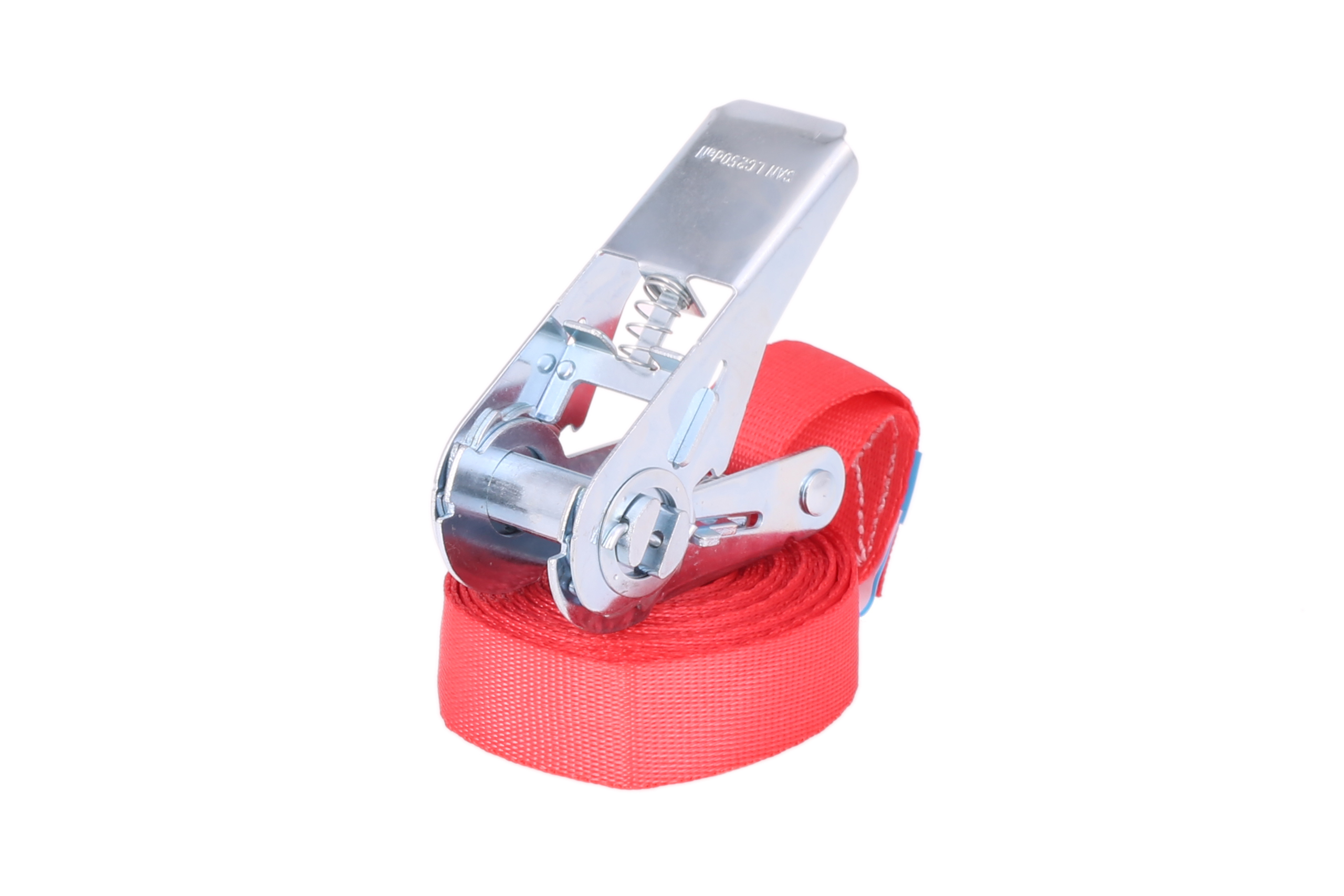
The 8-meter lashing strap with a 25mm width is the perfect solution for everyday securing tasks in both private and semi-professional applications . Whether camping , on a trailer , in the trunk , or for recreational use – this 8-meter lashing strap combines ease of use, solid quality, and unbeatable value . Thanks to the smooth-running ratchet, the strap can be tightened quickly and securely . The one-piece design without hooks reduces weight and allows for versatile applications, such as wrapping or pulling through for load securing . Technical details at a glance Length : 8 meters (one piece) Band width : 25mm Material : High-quality polyester webbing Preload force (STF) : 150 daN Lashing force (LC) : 250 daN straight / 500 daN in strapping Ratchet : Hobby ratchet, galvanized, smooth-running Color : Red (according to DIN EN 12195-2) Standard : DIN EN 12195-2 / GS-tested Your benefits at a glance ✅ Lashing strap 8 meters – ideal for longer loads and large spans ✅ Tension strap 25mm – narrow and light, but durable ✅ One-piece system – flexible use, without annoying hooks ✅ Clever - Quickly fixed thanks to the intuitive hobby ratchet ✅ Low weight – ideal for leisure, camping, cars & hobbies ✅ Tension strap 8m made of robust polyester – weather-resistant & tear-resistant ✅ Legally compliant application - lashing strap complies with DIN EN 12195-2 ✅ Affordable and reliable – ideal for frequent users Areas of application of lashing straps 8m lashing strap for securing bicycles, luggage, furniture or building materials 8 meter tensioning straps for car trailers, caravans, roof racks and station wagons As a tensioning belt 25mm ideal for lighter securing needs with manual force In the leisure sector – e.g. for camping, garden furniture or DIY projects Also suitable for smaller commercial transports (e.g. craftsmen, service vehicles) This tensioning strap is TÜV certified according to ISO 9001: Find even more 25mm tensioning straps at Sandax Is this strap not the right length, or are you looking for other 25mm lashing straps ? Simply click the button to go to our category with all 25mm lashing straps . All 25mm tensioning straps at a glance

Sandax PES strapping is the professional solution for your packaging and transport needs. The woven strapping has a width of 19 mm and an approximate breaking load of approximately 750 daN, providing the strength you need to secure your load during any transport. Use this reliable woven strapping for all your packaging and transport tasks and enjoy the peace of mind that your goods are safe and sound.

With the 6-piece set of 3m clamp lock straps from Sandax, you're making the optimal choice for transporting light loads from A to B. With a width of 25mm and a lashing capacity of 250 daN , these high-quality clamp lock straps will keep your light load secure. The neon yellow polyester webbing features robust clamp locks that allow for quick, easy, and secure locking. Our state-of-the-art strap set is ideal for everyday use at home or in businesses.