


What does DIN EN 12195-2 mean?
DIN EN 12195-2 is the European standard that specifies requirements for textile lashing straps for load securing . It defines the technical properties straps must have to be approved for safe transport .
Often referred to simply as EN 12195-2 , the standard actually refers to the same standard. Using tested tensioning straps for transport ensures that they meet a reliable minimum quality and comply with legal requirements.
Why is DIN EN 12195-2 so important?
The standard specifies the load values a lashing strap must achieve according to DIN EN 12195-2 and how these values are indicated on the strap label . This offers decisive advantages for transport companies, freight forwarders, and private users.:
- Legal certainty during controls
- Road safety through tested belts
- Transparency thanks to clear labeling on each belt
- Comparability between different manufacturers
Those who use non -certified products risk not only fines but also damage to the cargo or accidents.
Labeling requirement – How to identify compliant lashing straps
A lashing strap according to DIN EN 12195-2 must have a permanently attached label with all relevant data. This includes, among other things,:
- LC (Lashing Capacity) – the permissible tensile force in daN
- SHF (Standard Hand Force) – the standard hand force when clamping
- STF (Standard Tension Force) – the preload that can be achieved with the ratchet
- Standard specification “DIN EN 12195-2” – the clear proof of conformity
If this marking is missing, the belt may no longer be used in commercial road traffic .
Skip product gallery
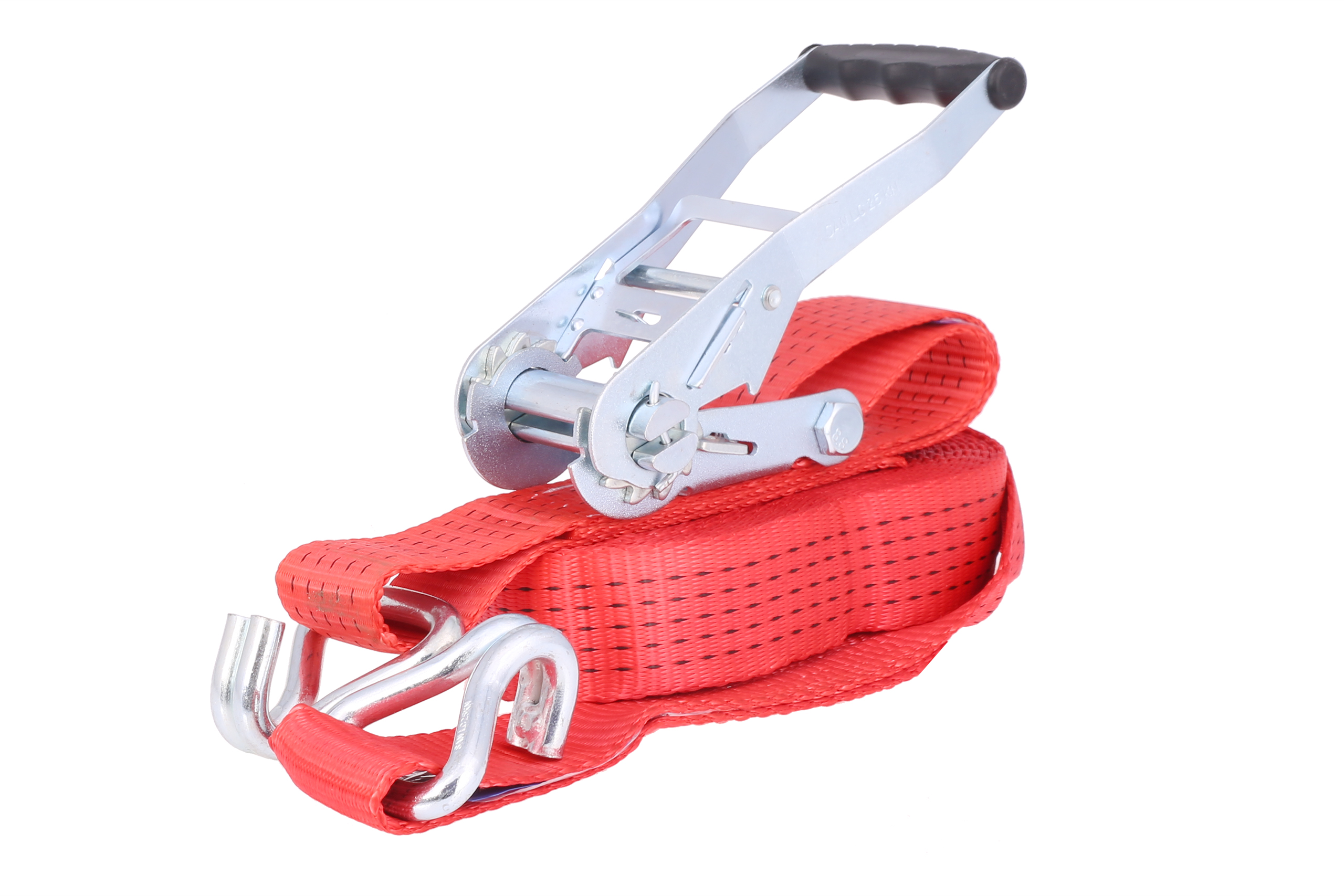
Lashing strap, 6m, 50mm, LC 2500 daN, two-piece, STF 300 daN, short lever ratchet
€9.52*
Made from durable, high-quality 50 mm wide polyester webbing , this 6 m lashing strap is the ideal solution for securely securing loads on trucks or vans . The fixed end extends 0.5 m , while the loose end measures 5.5 m . The LC value of 2500 daN guarantees maximum safety during transport . The ratchet with a pre-tensioning force of 300 daN allows for easy and trouble-free tensioning of the lashing strap .
Our tensioning strap meets the requirements of the DIN EN 12195-2 standard and is certified by TÜV .
Get this high-quality tensioning strap now for reliable load securing and stress-free transport! Technical product details at a glance Length : 6 meters (two parts: 0.5m fixed end + 5.5m loose end) Band width : 50 mm – designed for high tensile forces Lashing capacity (LC) : 2,500 daN straight / 5,000 daN in strapping Preload force (STF) : 350 daN Material : Webbing made of high-strength polyester, abrasion-resistant Color : Red Standard : EN 12195-2 certified Ratchet : Standard ratchet, galvanized, heavy-duty End fittings : sturdy hooks Use : Commercial, forwarding, industry, crafts, private Your advantages with the 6m tensioning strap from Sandax ✅ Tension strap 6 meters long – ideal for loads with a larger span ✅ Tension strap 50mm wide – particularly stable for heavy loads ✅ Two-part lashing strap – flexible use, quick installation ✅ Standard steel ratchet – easy handling with high clamping force ✅ Resistant - against weather, UV radiation, oil and chemicals ✅ Tension belt 2500 daN LC – suitable for professional transport ✅ High safety - thanks to GS-tested production according to DIN EN 12195-2 ✅ Universally usable – in trucks, vans, on trailers or in warehouses Typical applications of the 6m lashing straps Securing heavy pallets on loading areas (truck tensioning straps) Transport security in the forwarding and logistics industry Use on the construction site for machinery and materials Lashing furniture, building materials or heavy equipment Perfect for companies that rely on professional quality 6m tensioning straps
This tensioning strap is TÜV certified according to ISO 9001:
Find even more 50mm tensioning straps at Sandax
Is this strap not the right length, or are you looking for other 50mm lashing straps ? Simply click the button to go to our category with all 50mm lashing straps . All 50mm tensioning straps at a glance
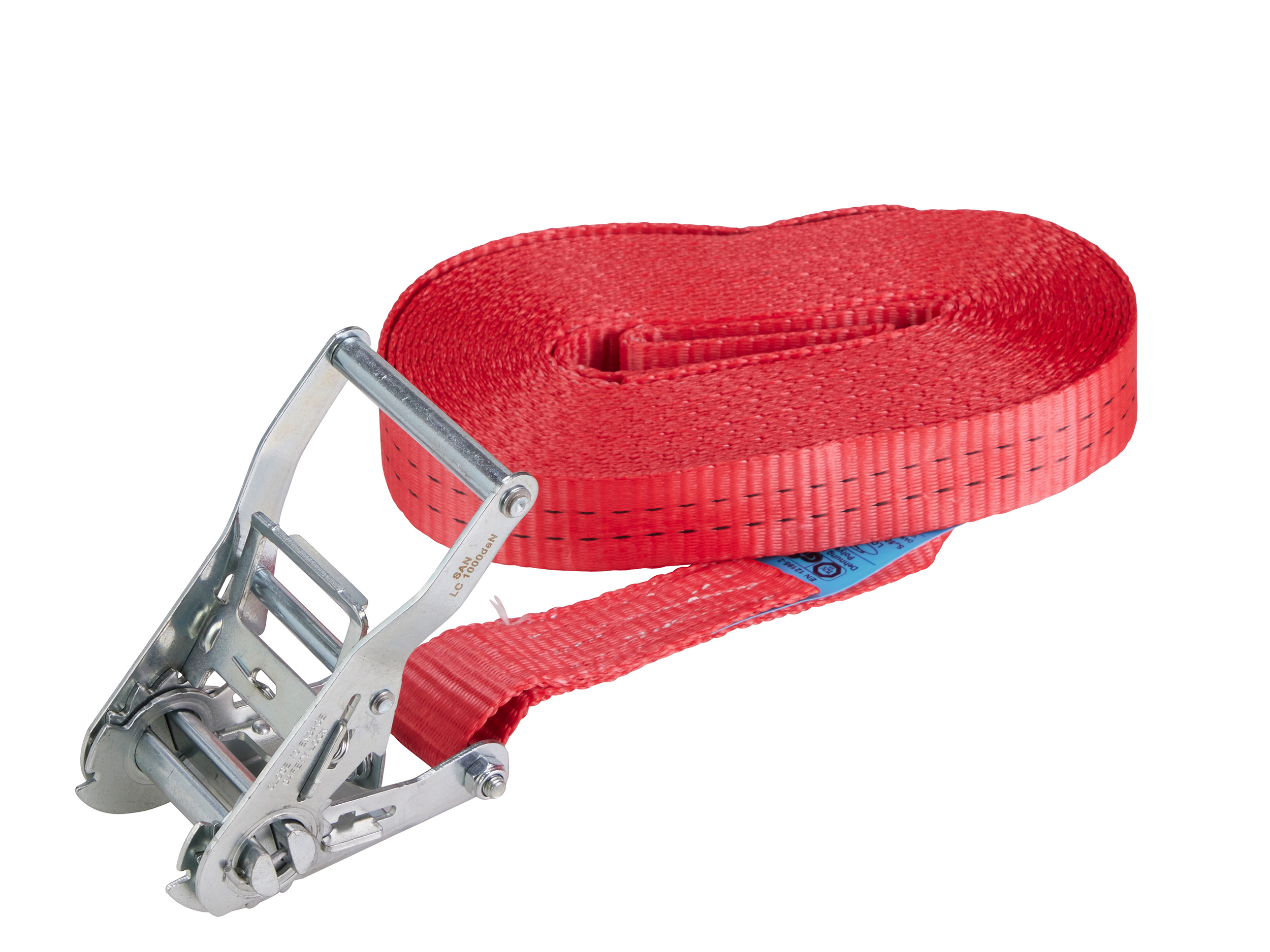
Lashing strap, 10m, 35mm, LC 2000daN, STF 200daN, one-piece, standard ratchet
€7.97*
Whether for professional freight transport or private use, proper load securing is crucial. The one-piece lashing strap from Sandax , measuring 10 meters long and 35 mm wide, is ideal for securing boxes, machinery, furniture, and much more. With a lashing capacity (LC) of 2000 daN and a standard pre-tension force (STF) of 200 daN, this strap is suitable for a wide range of applications and ensures maximum safety during transport . The integrated standard ratchet made of robust steel allows for quick and easy application.
Technical product details at a glance Design : One-piece with standard ratchet Length : 10 meters Width : 35 mm Lashing force (LC) : 2000 daN (straight pull) Preload force (STF) : 200 daN Material : High-strength, UV-resistant polyester Color : Red Certified : According to DIN EN 12195-2, TÜV and GS tested Labelling : Permanently sewn with all required safety information Your benefits at a glance ✅ Versatile – ideal for transport with trailers, vans, trucks or in the workshop ✅ 10 meters long – ideal for securing large or bulky loads ✅ Easy handling – thanks to the ergonomic standard ratchet with high operating comfort ✅ Durable & weatherproof – the polyester webbing is resistant to moisture, UV rays and abrasion ✅ Certified & compliant with standards – meets all requirements of DIN EN 12195-2, for safe use in commercial transport ✅ Cost-effective & reusable – long service life when used properly ✅ Safety label on the belt – with information on LC, STF, manufacturer and standard for quick check Typical applications for the 10m tensioning strap from Sandax Transport security in commercial freight transport Fastening furniture, pallets or machines Securing building materials on flatbed trucks and trailers Use by forwarding companies, tradesmen, event logistics or private removals Why Sandax? Sandax stands for quality, reliability, and safety in the field of load securing . With decades of experience and certified products, Sandax is one of the leading suppliers in Germany. Every lashing strap is tested and meets the highest standards – for your safety on the road.
Order now and transport safely Rely on proven brand quality from Sandax – and ensure a secure hold during every transport. Combine the strap with other Sandax products such as edge protectors , storage bags , or anti-slip mats for a professional securing system.
This tensioning strap is TÜV certified according to ISO 9001:
Find even more 35mm tensioning straps at Sandax
Is this strap not the right length, or are you looking for other 35mm lashing straps ? Simply click the button to go to our category with all 35mm lashing straps . All 35mm tensioning straps at a glance
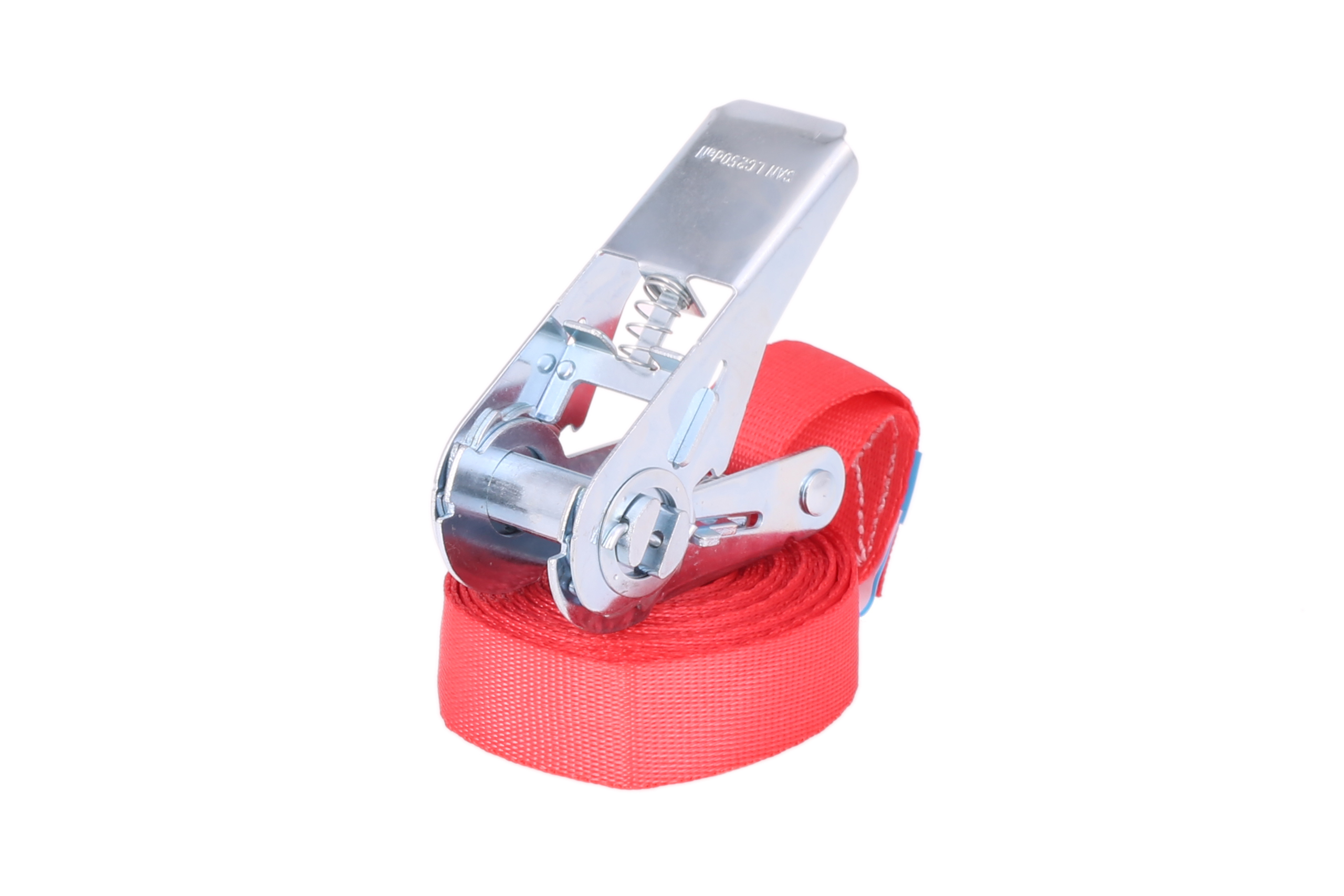
Lashing strap, 8m, 25mm, LC 500daN, one-piece, hobby ratchet
€3.57*
The 8-meter lashing strap with a 25mm width is the perfect solution for everyday securing tasks in both private and semi-professional applications . Whether camping , on a trailer , in the trunk , or for recreational use – this 8-meter lashing strap combines ease of use, solid quality, and unbeatable value .
Thanks to the smooth-running ratchet, the strap can be tightened quickly and securely . The one-piece design without hooks reduces weight and allows for versatile applications, such as wrapping or pulling through for load securing . Technical details at a glance Length : 8 meters (one piece) Band width : 25mm Material : High-quality polyester webbing Preload force (STF) : 150 daN Lashing force (LC) : 250 daN straight / 500 daN in strapping Ratchet : Hobby ratchet, galvanized, smooth-running Color : Red (according to DIN EN 12195-2) Standard : DIN EN 12195-2 / GS-tested Your benefits at a glance ✅ Lashing strap 8 meters – ideal for longer loads and large spans ✅ Tension strap 25mm – narrow and light, but durable ✅ One-piece system – flexible use, without annoying hooks ✅ Clever - Quickly fixed thanks to the intuitive hobby ratchet ✅ Low weight – ideal for leisure, camping, cars & hobbies ✅ Tension strap 8m made of robust polyester – weather-resistant & tear-resistant ✅ Legally compliant application - lashing strap complies with DIN EN 12195-2 ✅ Affordable and reliable – ideal for frequent users Areas of application of lashing straps 8m lashing strap for securing bicycles, luggage, furniture or building materials 8 meter tensioning straps for car trailers, caravans, roof racks and station wagons As a tensioning belt 25mm ideal for lighter securing needs with manual force In the leisure sector – e.g. for camping, garden furniture or DIY projects Also suitable for smaller commercial transports (e.g. craftsmen, service vehicles)
This tensioning strap is TÜV certified according to ISO 9001:
Find even more 25mm tensioning straps at Sandax
Is this strap not the right length, or are you looking for other 25mm lashing straps ? Simply click the button to go to our category with all 25mm lashing straps . All 25mm tensioning straps at a glance
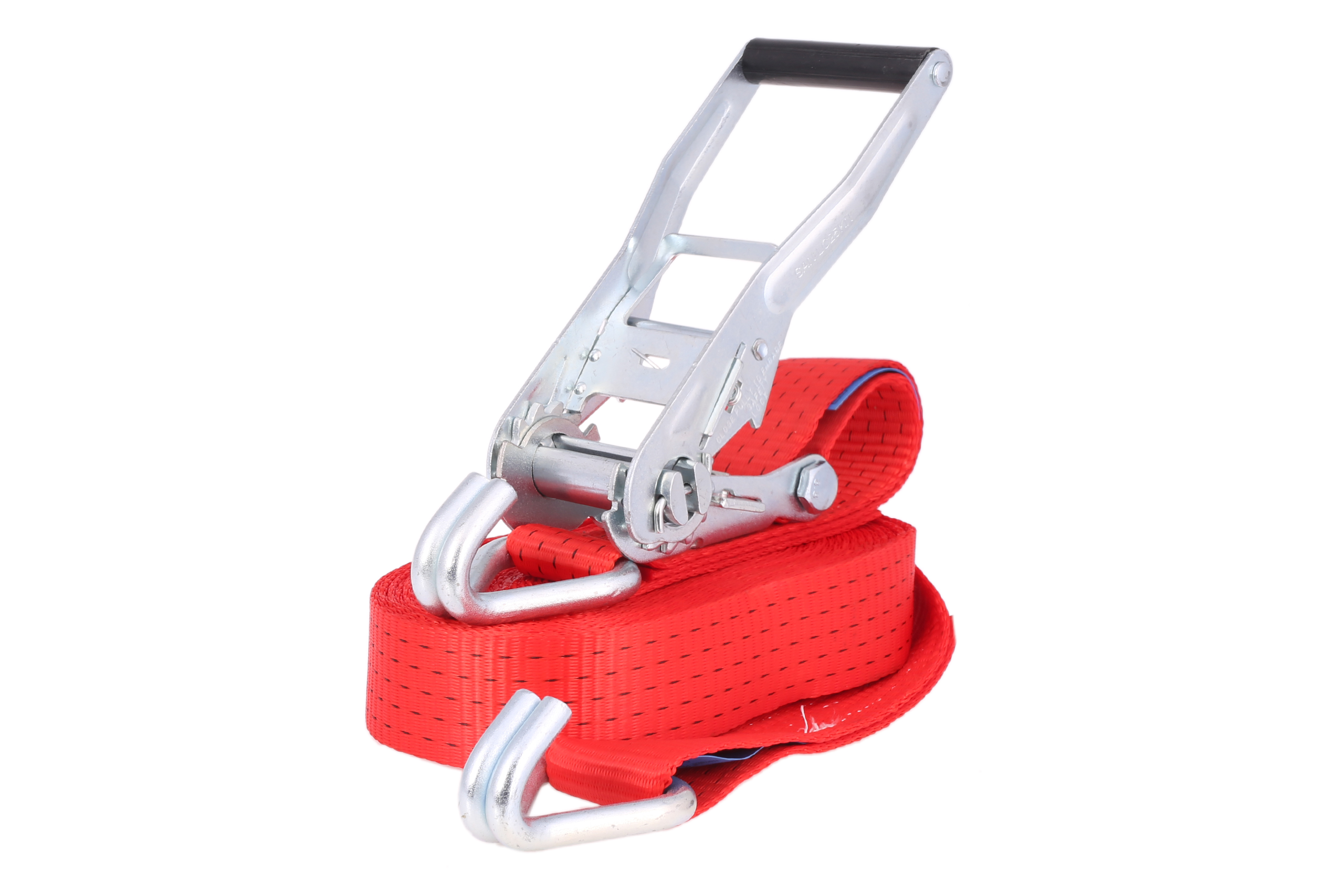
Lashing strap, 3m, 50mm, LC 2500daN, STF 350daN, two-piece, short lever ratchet
€8.33*
When securing transported goods, absolute reliability is required – whether in daily logistics operations, freight forwarding, or in the trades. The two-part Sandax lashing strap , 3 m long and 50 mm wide with a robust short-lever ratchet , offers the perfect combination of performance, safety, and ease of use. With a lashing force of 2500 daN (LC) in a straight pulling direction and a standard pre-tensioning force (STF) of 350 daN, this strap is ideal for securing heavy loads – both in commercial and private areas.
Technical data & product details Design : two-part with robust short lever ratchet Length : 3.00 m (of which 0.3 m fixed end with ratchet + 2.7 m loose end) Width : 50 mm Material : high-strength polyester webbing (PES), UV and weather resistant Lashing force (LC) : 2500 daN in straight pull STF (Standard Tension Force) : 350 daN when using the ratchet Approval & Standard : according to DIN EN 12195-2, GS mark, TÜV tested Color : Red Labelling : permanently sewn-in labels with all legally required information Ratchet : galvanized short lever ratchet made of high-quality steel, ergonomic and durable Typical applications of this 3m tensioning strap Freight forwarding & freight transport : Truck tensioning belts as reliable securing of pallets, machines, containers Construction & Crafts : Transport of building materials and equipment on flatbeds or trailers Agriculture : Securing crops, barrels or equipment Furniture transport : securing fragile items during moving or furniture shipping Industry & warehouse logistics : ideal for use with forklift or crane loading Your benefits at a glance ✅ Fast and safe application :
The ergonomically designed short-lever ratchet can be tightened and released effortlessly. Thanks to the two-part system, even larger spans can be flexibly bridged. ✅ Highest safety according to standard :
The belt meets all legal requirements according to DIN EN 12195-2 and offers maximum safety in road traffic. ✅ Robust & durable :
The webbing material used is abrasion-resistant, dirt-repellent, and resistant to moisture and UV radiation – ideal for outdoor use in all weather conditions. ✅ Economical & universal :
A durable, high-quality product with high reusability – saves costs and resources. ✅ Clearly labeled & traceable :
Each strap is provided with a sewn-in label containing all legally required information – important for inspections and operational safety. Rely on Sandax quality – for your safety on the road Sandax stands for tested, reliable products in the field of load securing and transport safety. This lashing strap is a high-quality professional tool that no transport equipment should be without – whether in the shipping industry, on construction sites, or in private use. Tip : Complement your equipment with suitable edge protection angles , anti-slip mats or storage bags from our range for an all-round safe transport system.
This tensioning strap is TÜV certified according to ISO 9001:
Find even more 50mm tensioning straps at Sandax
Is this strap not the right length, or are you looking for other 50mm lashing straps ? Simply click the button to go to our category with all 50mm lashing straps . All 50mm tensioning straps at a glance
DIN EN 12195-2 Lashing straps in use
Tested DIN EN 12195-2 lashing straps are used in all areas of logistics and private transport. They are particularly indispensable for heavy loads such as machinery or pallets .
Typical areas of application:
- Freight forwarding and freight transport – securing truck loads
- Crafts & Construction – Transport of building materials
- Private sector – furniture and moving transport
A lashing strap DIN EN 12195-2 offers maximum safety because it has been manufactured and tested according to strictly defined standards.
Differences to non-standardized belts
Our comparison has shown that belts without certification often lose stability more quickly, have weaker seams or are insufficiently labelled.
With a lashing strap DIN EN 12195-2, however, it is ensured that:
- the tear resistance is tested
- the seams meet certain minimum standards
- the ratchet mechanism works reliably
- the label remains permanently legible
In short : only with certified belts do you have complete safety.
Conclusion – Safety through standards
DIN EN 12195-2 is not just a regulation, but a guarantee for greater safety in road traffic . Anyone who relies on lashing straps that comply with DIN EN 12195-2 can rely on tested quality – whether for professional transport or private use .
Fragen und Antworten (FAQ) zur DIN EN 12195-2
Was regelt die Norm DIN EN 12195-2?
Die DIN EN 12195-2 definiert die technischen Anforderungen an textile Zurrgurte aus Chemiefasern, die zur Ladungssicherung im Straßenverkehr verwendet werden. Sie legt fest, welche Materialien zulässig sind, wie Zurrgurte konstruiert sein müssen und welche Kennzeichnungen auf dem Etikett angegeben werden müssen. Dadurch wird sichergestellt, dass Zurrgurte europaweit einheitlichen Sicherheitsstandards entsprechen.
Welche Angaben müssen auf einem Zurrgurt-Etikett stehen?
Jeder normgerechte Zurrgurt muss ein dauerhaftes Etikett tragen. Darauf finden sich unter anderem:
- LC (Lashing Capacity) – maximale Zurrkraft
- STF (Standard Tension Force) – Vorspannkraft der Ratsche
- SHF (Standard Hand Force) – definierte Handkraft beim Spannen
- Material des Gurtbands
- Herstellerangaben und Produktionsdaten
Fehlt dieses Etikett oder ist es nicht mehr lesbar, darf der Zurrgurt nicht mehr eingesetzt werden.
Was bedeutet die Angabe LC bei Zurrgurten?
Die LC (Lashing Capacity) beschreibt die maximale Zugkraft, die ein Zurrgurt im Einsatz sicher aufnehmen kann. Dieser Wert wird meist in daN (Dekanewton) angegeben und stellt die Belastungsgrenze des Gurtes dar.
Was ist die Vorspannkraft STF?
Die STF (Standard Tension Force) gibt an, welche Vorspannkraft beim Spannen des Gurtes mit der Ratsche aufgebracht wird. Diese Kraft presst die Ladung auf die Ladefläche und erhöht dadurch die Reibung zwischen Ladung und Untergrund.
Wie unterscheidet sich DIN EN 12195-1 von DIN EN 12195-2?
Die beiden Normen ergänzen sich:
- DIN EN 12195-1 regelt die Berechnung der erforderlichen Sicherungskräfte.
- DIN EN 12195-2 legt die Anforderungen an textile Zurrgurte selbst fest, also Aufbau, Prüfung und Kennzeichnung.
Wann darf ein Zurrgurt nicht mehr verwendet werden?
Ein Zurrgurt darf nicht mehr eingesetzt werden, wenn:
- das Kennzeichnungsetikett fehlt oder unlesbar ist
- das Gurtband beschädigt oder eingeschnitten ist
- Nähte oder Beschläge defekt sind
- starke Verformungen oder chemische Schäden auftreten
Solche Mängel können die Belastbarkeit des Gurtes erheblich reduzieren und stellen ein Sicherheitsrisiko dar. Weitere Informationen finden Sie in unserer Zurrgurt Anleitung.