


Load securing plays a crucial role in road traffic – especially in heavy goods transport . Yet, this issue is often underestimated, which regularly leads to accidents caused by inadequate load securing . Unsecured or improperly secured cargo can pose a fatal hazard during sudden braking, cornering, or evasive maneuvers . This article examines the causes, legal framework, and preventative measures to avoid accidents – supported by current statistics on accidents caused by load securing .
What does load securing mean?
Load securing refers to all measures necessary to prevent cargo from slipping, tipping, or falling from the vehicle during travel . This applies to both freight transport by truck and smaller transport vehicles .
Objectives of load securing
- Protection of the driver, the load and other road users
- Compliance with legal regulations (e.g. § 22 and § 23 StVO)
- Prevention of property damage and personal injury
Common causes of accidents due to inadequate or incorrect load securing
The reasons for accidents caused by incorrect load securing are manifold, but are often due to human error or ignorance:
- Missing or insufficient lashing equipment
- Improper load distribution
- Use of unsuitable vehicles for certain transport goods
- Time pressure in everyday logistics
A truck accident can have fatal consequences – for the driver, following vehicles and even innocent bystanders.
Skip product gallery
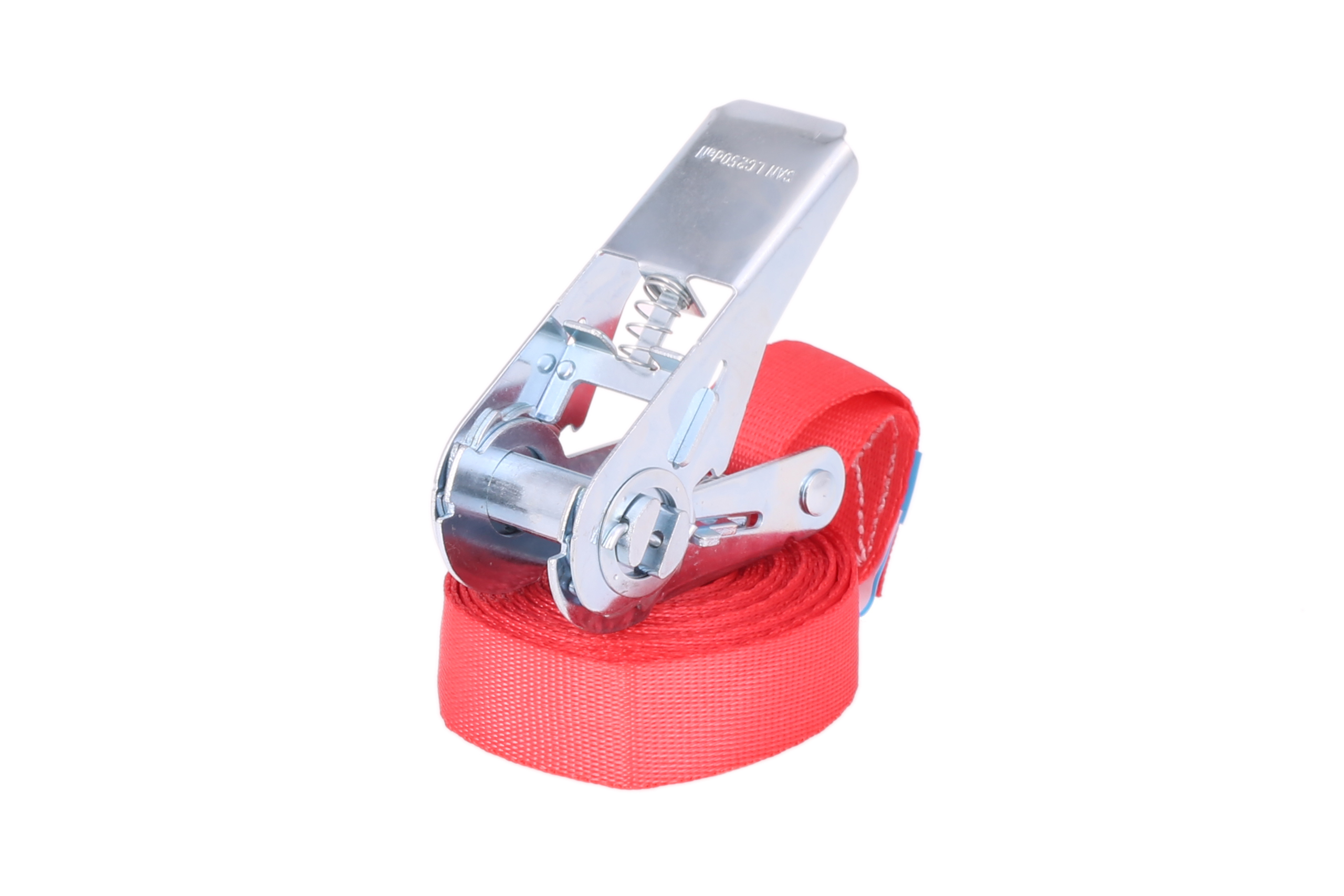
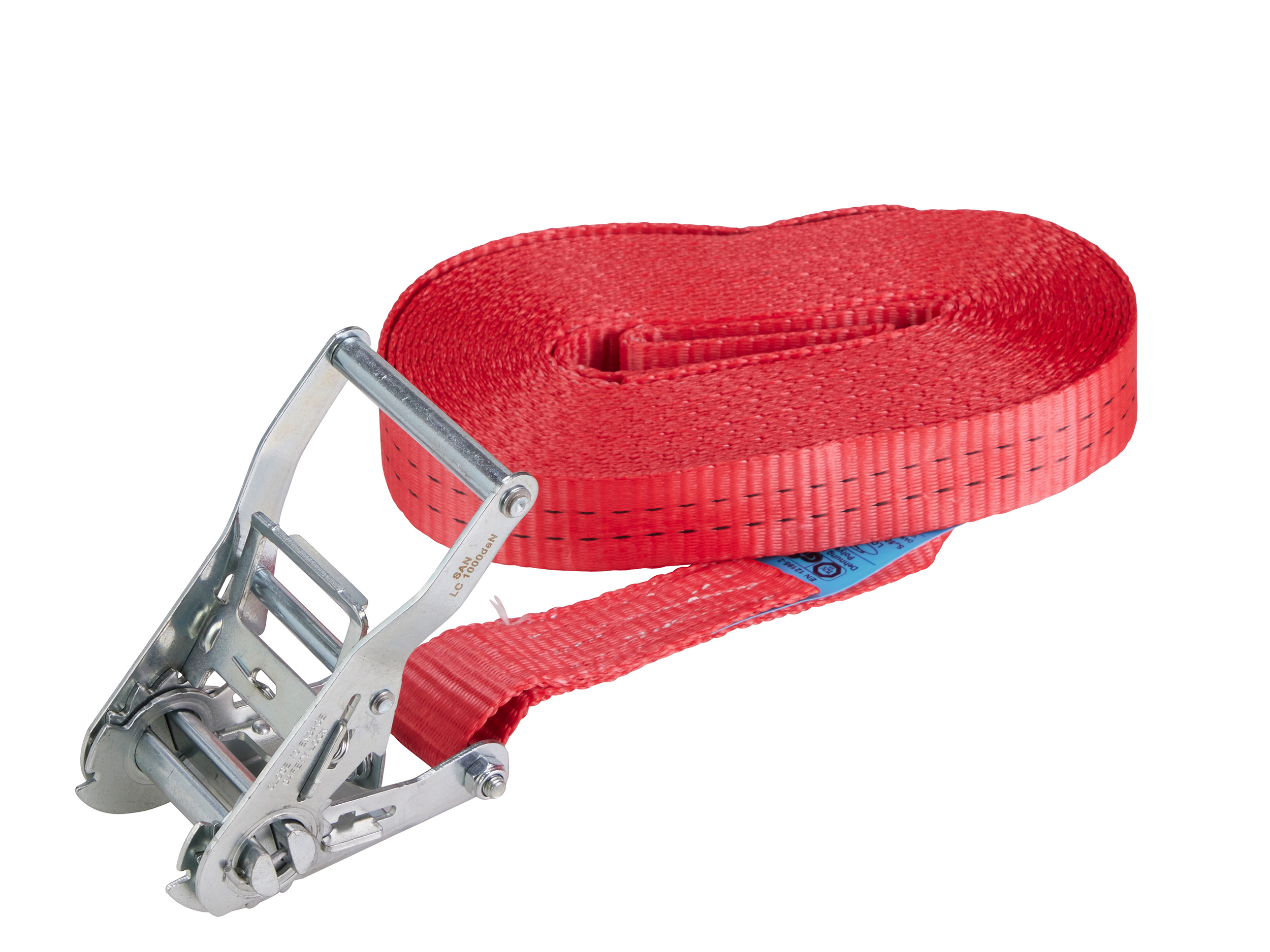


Load securing products in the Sandax online shop
Lashing strap, 8m, 25mm, LC 500daN, one-piece, hobby ratchet
€3.57*
The 8-meter lashing strap with a 25mm width is the perfect solution for everyday securing tasks in both private and semi-professional applications . Whether camping , on a trailer , in the trunk , or for recreational use – this 8-meter lashing strap combines ease of use, solid quality, and unbeatable value .
Thanks to the smooth-running ratchet, the strap can be tightened quickly and securely . The one-piece design without hooks reduces weight and allows for versatile applications, such as wrapping or pulling through for load securing . Technical details at a glance Length : 8 meters (one piece) Band width : 25mm Material : High-quality polyester webbing Preload force (STF) : 150 daN Lashing force (LC) : 250 daN straight / 500 daN in strapping Ratchet : Hobby ratchet, galvanized, smooth-running Color : Red (according to DIN EN 12195-2) Standard : DIN EN 12195-2 / GS-tested Your benefits at a glance ✅ Lashing strap 8 meters – ideal for longer loads and large spans ✅ Tension strap 25mm – narrow and light, but durable ✅ One-piece system – flexible use, without annoying hooks ✅ Clever - Quickly fixed thanks to the intuitive hobby ratchet ✅ Low weight – ideal for leisure, camping, cars & hobbies ✅ Tension strap 8m made of robust polyester – weather-resistant & tear-resistant ✅ Legally compliant application - lashing strap complies with DIN EN 12195-2 ✅ Affordable and reliable – ideal for frequent users Areas of application of lashing straps 8m lashing strap for securing bicycles, luggage, furniture or building materials 8 meter tensioning straps for car trailers, caravans, roof racks and station wagons As a tensioning belt 25mm ideal for lighter securing needs with manual force In the leisure sector – e.g. for camping, garden furniture or DIY projects Also suitable for smaller commercial transports (e.g. craftsmen, service vehicles)
This tensioning strap is TÜV certified according to ISO 9001:
Find even more 25mm tensioning straps at Sandax
Is this strap not the right length, or are you looking for other 25mm lashing straps ? Simply click the button to go to our category with all 25mm lashing straps . All 25mm tensioning straps at a glance
Lashing strap, 10m, 35mm, LC 2000daN, STF 200daN, one-piece, standard ratchet
€7.97*
Whether for professional freight transport or private use, proper load securing is crucial. The one-piece lashing strap from Sandax , measuring 10 meters long and 35 mm wide, is ideal for securing boxes, machinery, furniture, and much more. With a lashing capacity (LC) of 2000 daN and a standard pre-tension force (STF) of 200 daN, this strap is suitable for a wide range of applications and ensures maximum safety during transport . The integrated standard ratchet made of robust steel allows for quick and easy application.
Technical product details at a glance Design : One-piece with standard ratchet Length : 10 meters Width : 35 mm Lashing force (LC) : 2000 daN (straight pull) Preload force (STF) : 200 daN Material : High-strength, UV-resistant polyester Color : Red Certified : According to DIN EN 12195-2, TÜV and GS tested Labelling : Permanently sewn with all required safety information Your benefits at a glance ✅ Versatile – ideal for transport with trailers, vans, trucks or in the workshop ✅ 10 meters long – ideal for securing large or bulky loads ✅ Easy handling – thanks to the ergonomic standard ratchet with high operating comfort ✅ Durable & weatherproof – the polyester webbing is resistant to moisture, UV rays and abrasion ✅ Certified & compliant with standards – meets all requirements of DIN EN 12195-2, for safe use in commercial transport ✅ Cost-effective & reusable – long service life when used properly ✅ Safety label on the belt – with information on LC, STF, manufacturer and standard for quick check Typical applications for the 10m tensioning strap from Sandax Transport security in commercial freight transport Fastening furniture, pallets or machines Securing building materials on flatbed trucks and trailers Use by forwarding companies, tradesmen, event logistics or private removals Why Sandax? Sandax stands for quality, reliability, and safety in the field of load securing . With decades of experience and certified products, Sandax is one of the leading suppliers in Germany. Every lashing strap is tested and meets the highest standards – for your safety on the road.
Order now and transport safely Rely on proven brand quality from Sandax – and ensure a secure hold during every transport. Combine the strap with other Sandax products such as edge protectors , storage bags , or anti-slip mats for a professional securing system.
This tensioning strap is TÜV certified according to ISO 9001:
Find even more 35mm tensioning straps at Sandax
Is this strap not the right length, or are you looking for other 35mm lashing straps ? Simply click the button to go to our category with all 35mm lashing straps . All 35mm tensioning straps at a glance
Aluminium lashing rail 213, retractable, with wing at the top, 2000 mm
€31.65*
This innovative, retractable lashing track offers maximum functionality and seamless integration into your cargo space. With a length of 2000 mm and equipped with a practical wing on the top , this track allows for versatile and efficient securing of your goods . The high-quality aluminum material ensures lightness without compromising on robustness. The retractable design means that the track lies flat with the floor when not in use, ensuring optimal use of the cargo space and safe walking routes. Whether for professional use in transport vehicles or for demanding DIY projects , the aluminum lashing track 213 from Sandax is the ideal choice for anyone who values safety, quality, and efficiency .
Set of 6, clamp lock lashing straps, 3 m, 25 mm, LC 250 daN, neon yellow
€14.28*
With the 6-piece set of 3m clamp lock straps from Sandax, you're making the optimal choice for transporting light loads from A to B. With a width of 25mm and a lashing capacity of 250 daN , these high-quality clamp lock straps will keep your light load secure. The neon yellow polyester webbing features robust clamp locks that allow for quick, easy, and secure locking. Our state-of-the-art strap set is ideal for everyday use at home or in businesses.
Accidents caused by inadequate load securing – statistics
The statistics on accidents caused by load securing show how explosive the issue is:
- According to the German Road Safety Council (DVR), around 20–25% of truck accidents each year are due to inadequate or incorrect load securing.
- About one in four accidents involving inadequate load securing results in serious personal injuries.
- Police and Federal Office of Public Health (BAG) inspections revealed that approximately 70% of the trucks inspected had deficiencies in load securing.
These figures make it clear: load securing accidents are not a marginal phenomenon, but a systemic problem in the transport sector .
Consequences and legal consequences
An accident due to inadequate load securing usually results in legal consequences:
- Fines for drivers and entrepreneurs
- Points in Flensburg
- In extreme cases: prison sentences for personal injuries
- Insurance companies can refuse to settle
Prevention: How to avoid load securing accidents
Training & Awareness
Regular training on load securing and accident prevention is essential – both for drivers and logistics staff.
Use of suitable tools
This includes:
- Anti-slip mats
- Tensioning straps with sufficient pre-tensioning force
- Load securing nets
- Form-fitting loading
- Other products from our range
Technological support
Digital sensors and monitoring systems help to monitor the load during the journey and detect hazards at an early stage .
Conclusion on inadequate load securing
Accidents caused by inadequate load securing are preventable – with the necessary knowledge, the right equipment, and a clear culture of responsibility within companies. Accident statistics in the area of load securing clearly demonstrate that there is enormous potential for improvement . Preventive measures not only protect themselves but also make an active contribution to road safety on our roads.
Do you need a free initial consultation on load securing ? Simply fill out the form below.:
10-point checklist for load securing
Download our free PDF checklist with 10 important points for load securing .
Download load securing checklistFAQ – Unfall durch falsche Ladungssicherung
Wie kann eine falsche Ladungssicherung zu einem Unfall führen?
Wenn Ladung nicht richtig gesichert ist, kann sie sich während der Fahrt bewegen. Bei Bremsmanövern, Kurven oder plötzlichen Ausweichbewegungen wirken starke Kräfte auf das Transportgut. Ohne geeignete Sicherung kann die Ladung verrutschen, kippen oder sogar vom Fahrzeug fallen. Dadurch entstehen gefährliche Situationen für den Fahrer und andere Verkehrsteilnehmer.
Welche Gefahren entstehen durch ungesicherte Ladung?
Ungesicherte Ladung kann verschiedene Risiken verursachen, beispielsweise:
- Verrutschen der Ladung im Fahrzeug
- Verlust von Gegenständen auf der Fahrbahn
- Instabilität des Fahrzeugs
- Beschädigung der transportierten Güter
Im schlimmsten Fall kann schlecht gesicherte Ladung zu schweren Verkehrsunfällen mit Personenschäden führen.
Wie häufig passieren Unfälle durch mangelnde Ladungssicherung?
Schätzungen zufolge ereignen sich in Deutschland jedes Jahr mehrere tausend Verkehrsunfälle, die auf fehlerhafte oder fehlende Ladungssicherung zurückzuführen sind.
Solche Unfälle können sowohl Sachschäden als auch schwere Verletzungen verursachen und stellen ein erhebliches Sicherheitsrisiko im Straßenverkehr dar.
Warum wird das Risiko falscher Ladungssicherung häufig unterschätzt?
Viele Transporte verlaufen ohne Zwischenfälle, weshalb die Gefahr oft unterschätzt wird. Gleichzeitig zeigen Kontrollen, dass bei einem großen Teil der Lkw Mängel bei der Ladungssicherung festgestellt werden, was das tatsächliche Risiko deutlich erhöht.
Deshalb gilt das Thema Ladungssicherung als einer der wichtigsten Sicherheitsfaktoren im Güterverkehr.