


Why is the discard age of tensioning straps important?
When should a tensioning strap be removed?
- Damage to the webbing: Cracks, cuts or deformations of the material lead to a significant weakening of the holding force.
- Abrasion and wear : Severe fraying or worn areas are an indicator of advanced material degradation.
- Knots in the webbing : These drastically reduce the load-bearing capacity of the belt and can lead to failure.
- Seam damage : If the safety seams come undone or are severely damaged, the structural integrity is at risk.
- Corrosion or damage to the ratchet or hooks : Rust, deformation or breakage of the metal parts impairs functionality.
- Missing or illegible labeling : Every tensioning strap must have a legible label containing the lashing capacity (LC) and other safety-relevant information. If the label is missing or illegible, the tensioning strap must no longer be used.


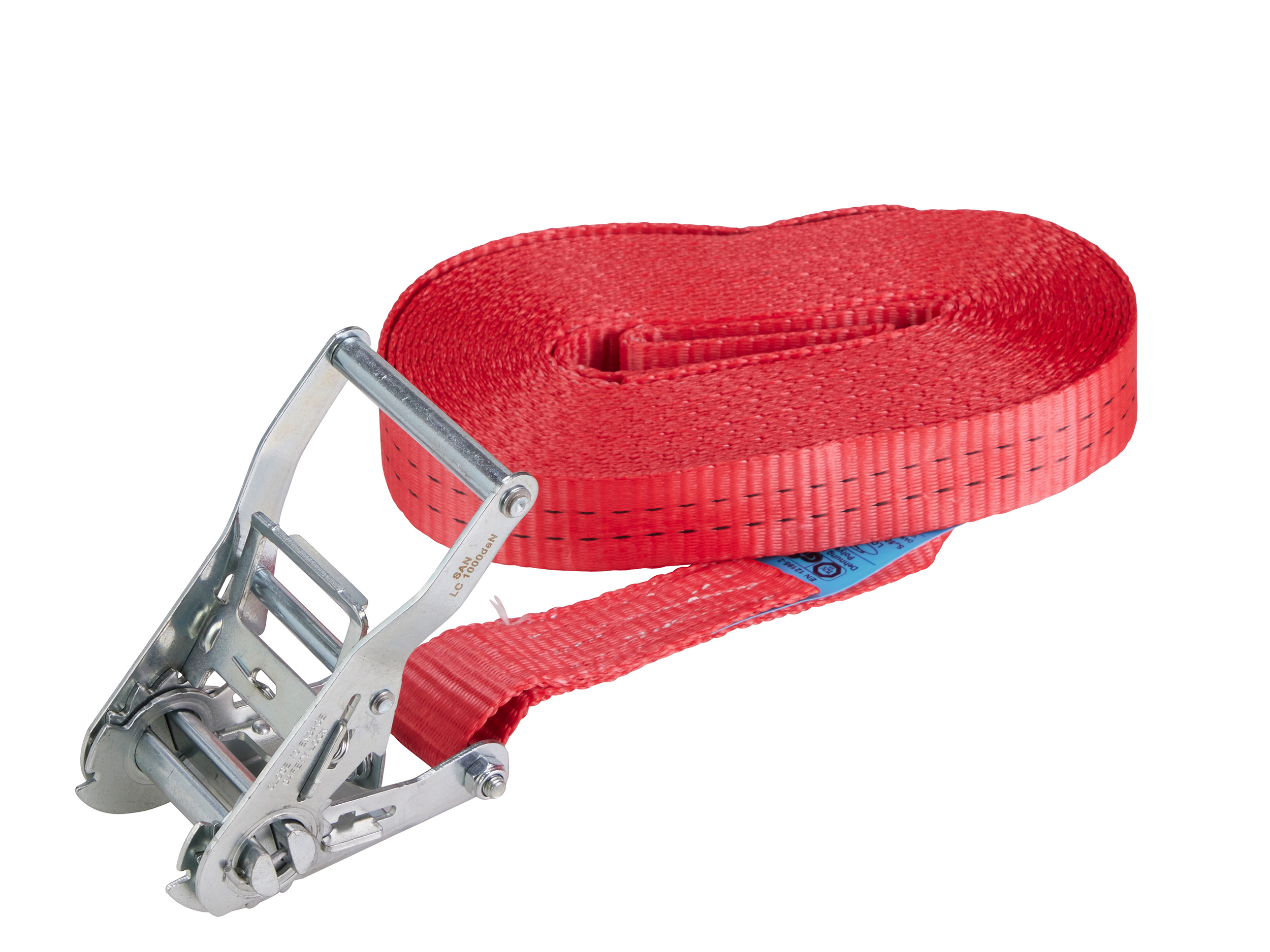


Regular inspections and proper storage
- Store in a dry and clean place : Avoid direct sunlight and moisture.
- No contact with chemicals : Oils, solvents or other aggressive substances can attack the material.
- Correct handling : Do not pull tensioning straps over sharp edges, but use edge protectors if necessary.